Summary
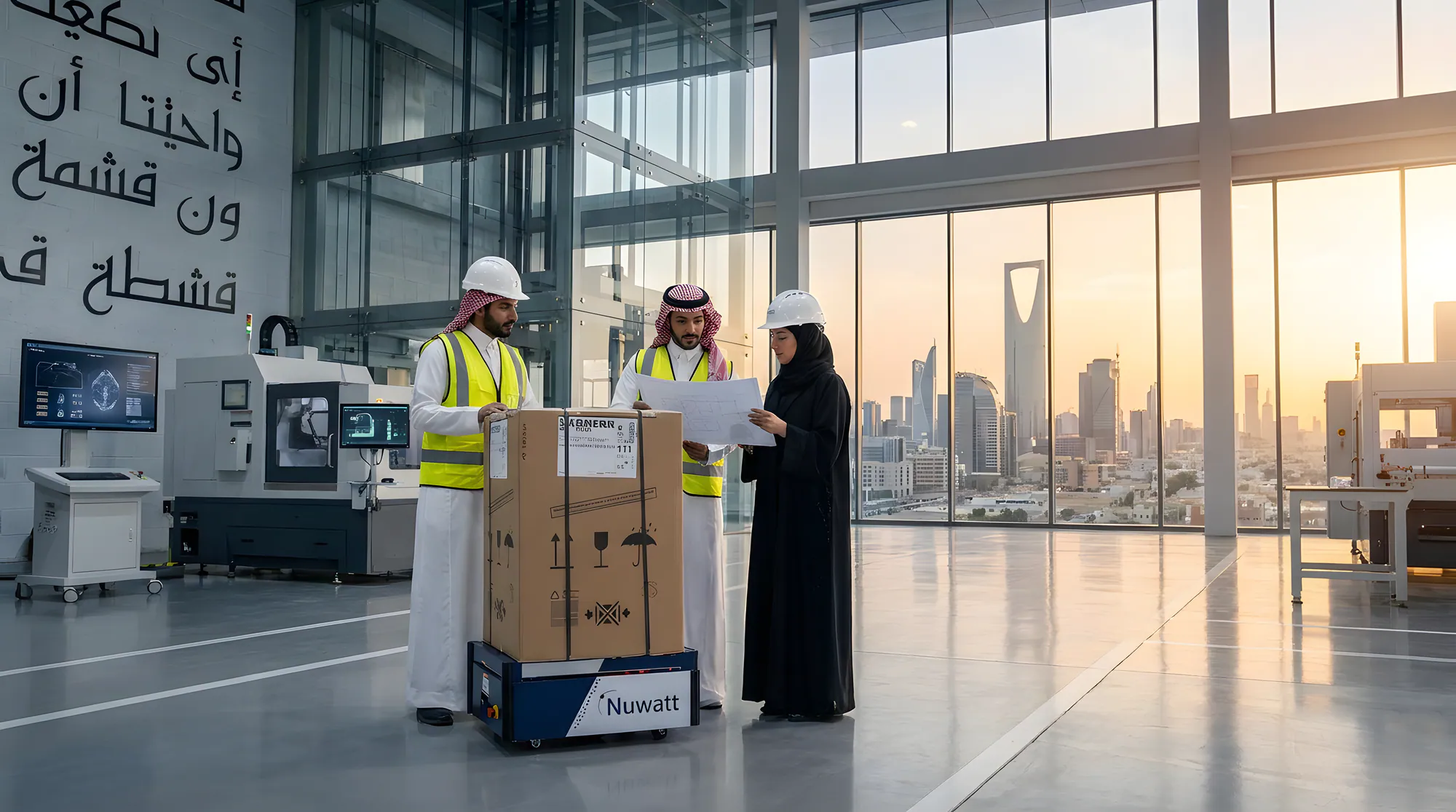
Autonomous mobile robots are becoming part of how the Kingdom moves goods, serves customers and cares for its public spaces. When those robots are imported as sealed boxes, the knowledge, the data and the ability to repair and improve them stay abroad. Nuwatt Technovation takes the opposite approach: we design the circuit boards, build the mechanical structures, write the software and service the robots here, so that every layer of the machine is understood, owned and controlled inside the Kingdom.
Why sovereignty matters in robotics
A robot is not a single product. It is a stack of decisions: which chips sit on its boards, which firmware runs them, where its data travels and who is allowed to open it up when something goes wrong.
When every one of those decisions is made elsewhere, the operator is left with a machine they can use but cannot truly own. Spare parts arrive on someone else's schedule. Software updates change behaviour without local input. Operational data leaves the building. And adapting the robot to local needs, from Arabic interfaces to the layout of a mosque or a Saudi supermarket, depends on a supplier's priorities rather than the customer's.
Sovereignty in robotics means closing that gap. It means the Kingdom holds the design knowledge, the manufacturing capability and the service expertise for the machines it depends on.
- Continuity. Local design and production shorten the path from a fault to a fix, and from a new requirement to a new version.
- Data control. Robots that are designed here can be built so that operational data stays under the owner's control.
- Fit for purpose. Engineers who know the environment design for it: the heat, the dust, the floor plans and the people.
- Local capability. Every board designed and every chassis built here develops talent and a supply base inside the Kingdom.
The four layers of a sovereign robot
We think about every robot as four layers that have to be owned together. Owning only one of them, for example writing the software for imported hardware, still leaves the machine dependent on others. Select a layer to see what it covers.
Electronics
Circuit design, boards, power and sensing
Schematics, PCB layout, power distribution, motor control and sensor interfaces. Designing these in-house means we know every component on the board and can replace, upgrade or source alternatives without waiting on a foreign supplier.
Mechanics
Chassis, enclosures, drive and payload structures
The physical robot: the chassis that carries the load, the enclosures that protect the electronics, the shelves and trays that hold products, and the materials chosen for each environment, from matte aluminium to stainless steel.
Software and AI
Navigation, fleet control and analytics
The intelligence that lets a robot move on its own, the dashboards that let operators see what the fleet is doing, and the AI models that turn the robots' data into real-time insight for decision makers.
Service
Installation, maintenance and continuous improvement
A robot is only as reliable as the team that looks after it. Because the people who designed the robot are the people who service it, problems are understood at the source and fixes can flow back into the next design.
Electronics, designed in-house
The circuit board is the nervous system of a robot. It is also where dependence usually begins, so it is where we start.
Our engineers take each board from idea to working hardware. That includes the schematic, the physical layout of every trace and component, fabrication of the bare board, assembly and a structured test before it is ever installed in a robot.
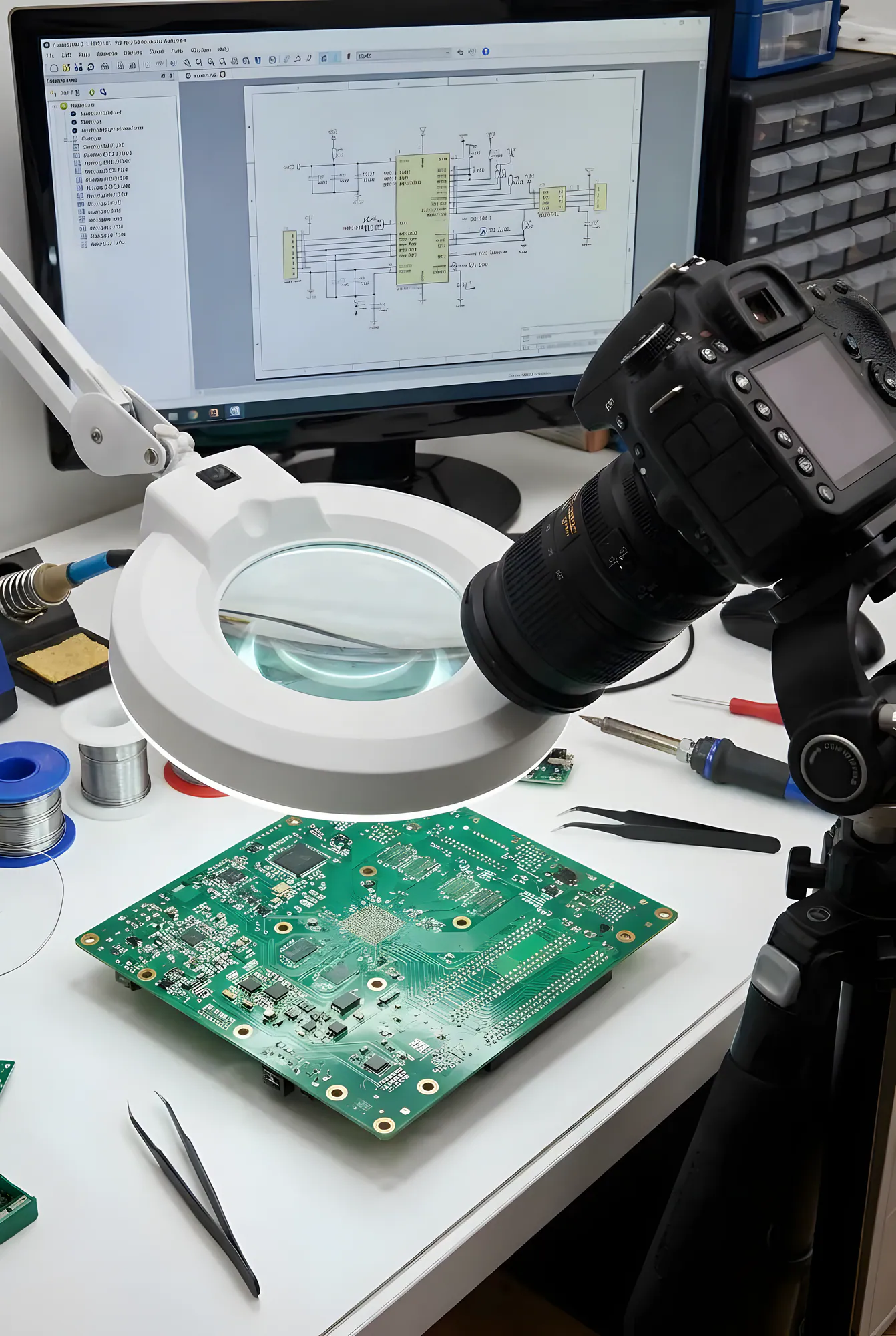
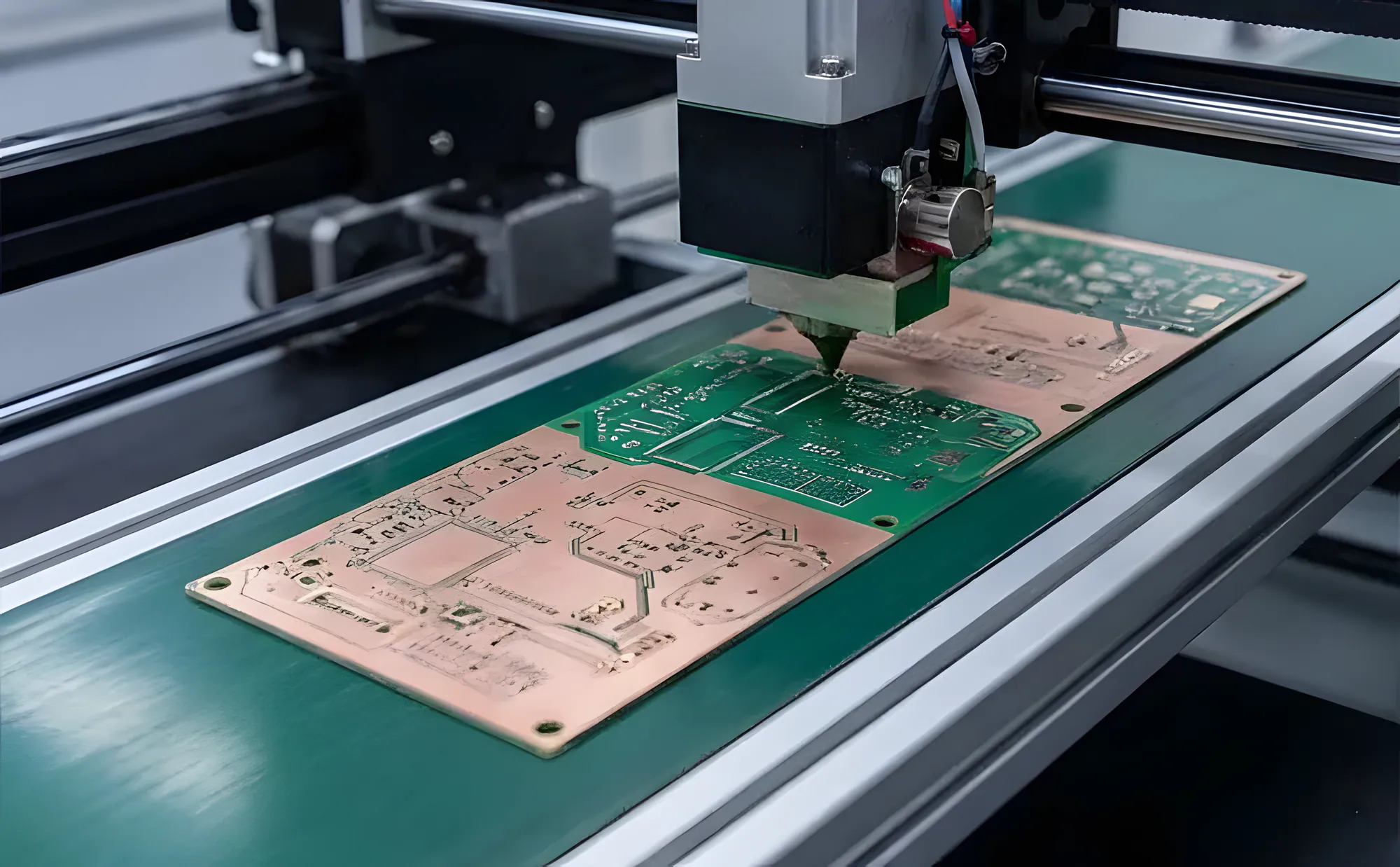
Owning this process gives us something no catalogue can: the freedom to change a board when a component becomes hard to source, when a customer needs a new sensor, or when a field report shows a better way to protect a circuit from heat and dust.
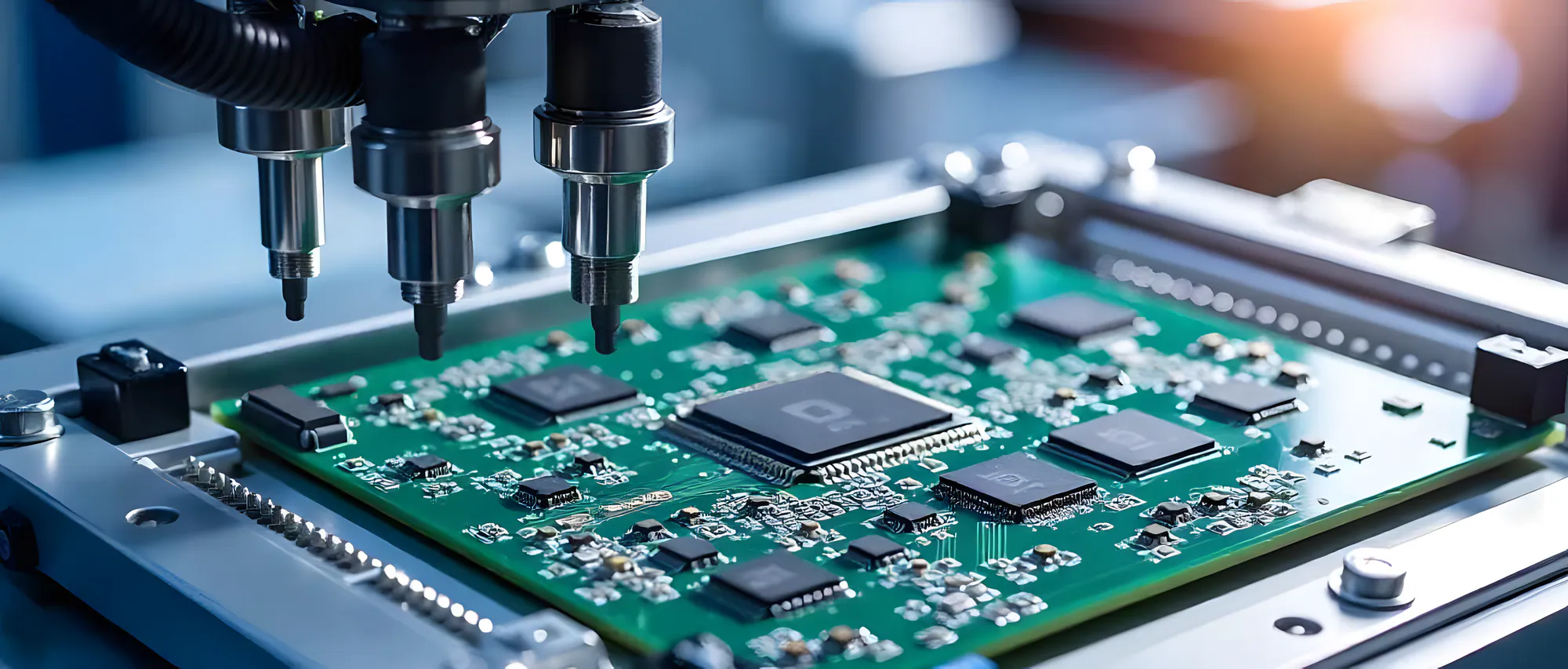
Every trace, every component and every line of firmware, known and owned in the Kingdom.
Mechanics and enclosures
Electronics need a body that protects them, cools them and makes them safe for the people around them.
Our mechanical team designs the structures that carry and shield a robot's systems. Material, ventilation, access and safety are decided together, because a beautiful enclosure that overheats or cannot be serviced is not a good design.
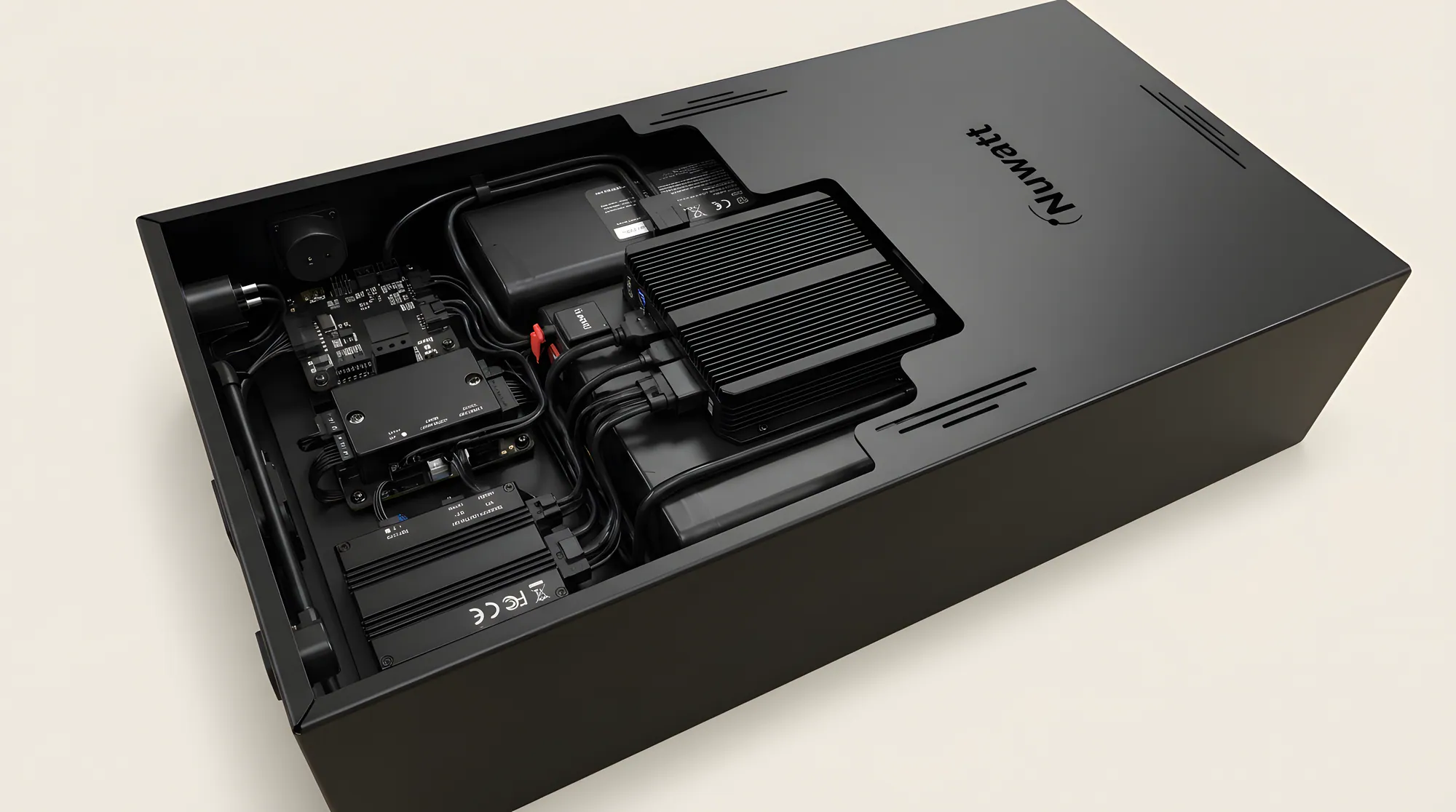
Power and control enclosure Design concept
- Material
- Aluminium, black matte coat
- Safety
- Emergency stop, power switches
- Status
- Illuminated buttons, LED indicators
- Cooling
- Patterned vents with fans
- Handling
- Front carry handles
A design study for a robust, serviceable home for a robot's power and control electronics.
The same thinking applies to the robot as a whole. For environments with strict hygiene and heavy daily use, stainless steel offers durability and is straightforward to clean. We are exploring what that means for robots that serve some of the Kingdom's most important public spaces.
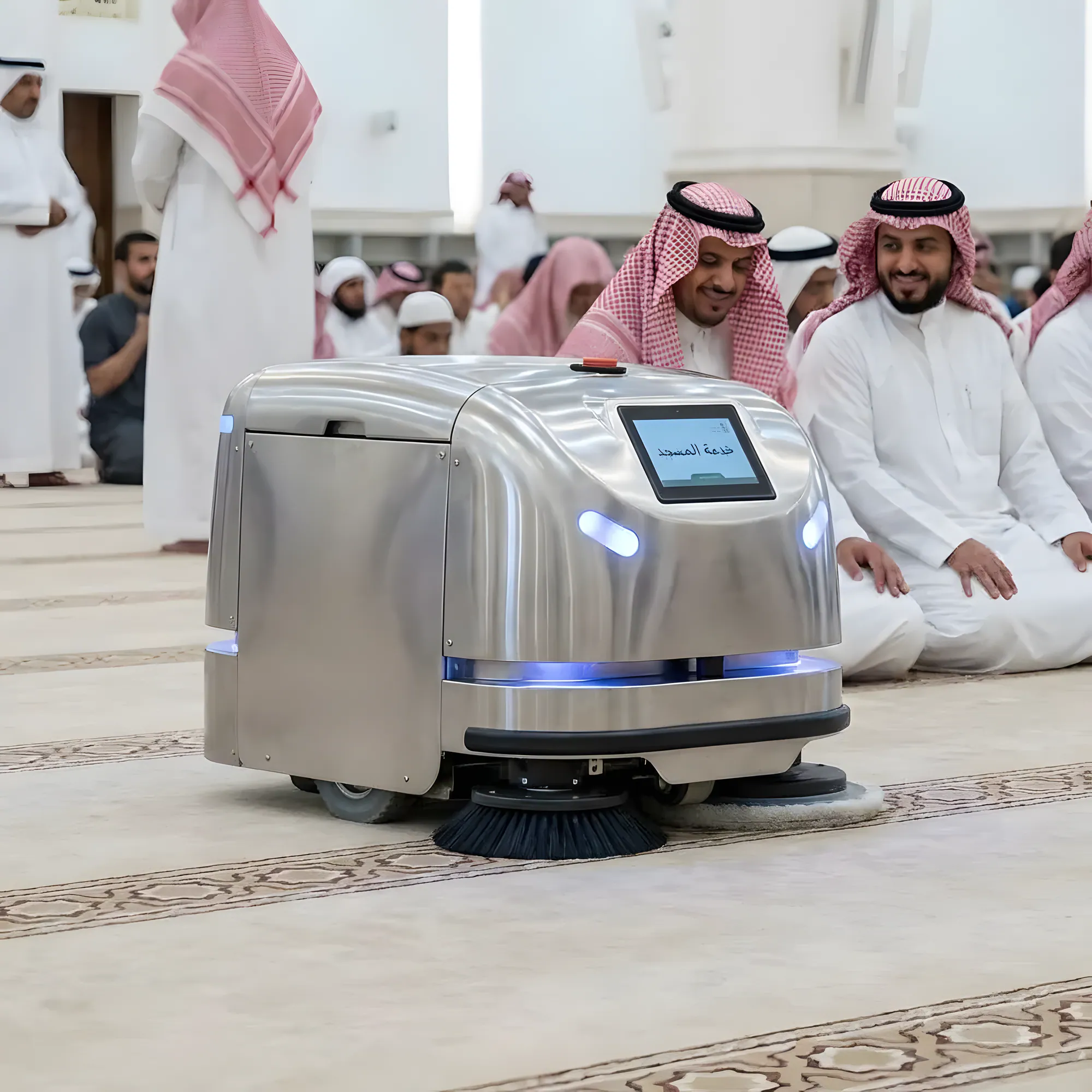
A robot designed for the Kingdom starts with the Kingdom's spaces, not with a catalogue from somewhere else.
Robots in the field
Engineering only proves itself on the floor. Our robots are already at work in retail, logistics and production environments.
UGO, our Unmanned Genius Operator, carries products on its shelves through store aisles and warehouse floors. Its trays hold cartons of different sizes, and the same platform can be configured for the needs of each site. Our autonomous mobile robots, manufactured in the Saudi Kingdom, move loads between stations so that people can spend their time on work that needs them.
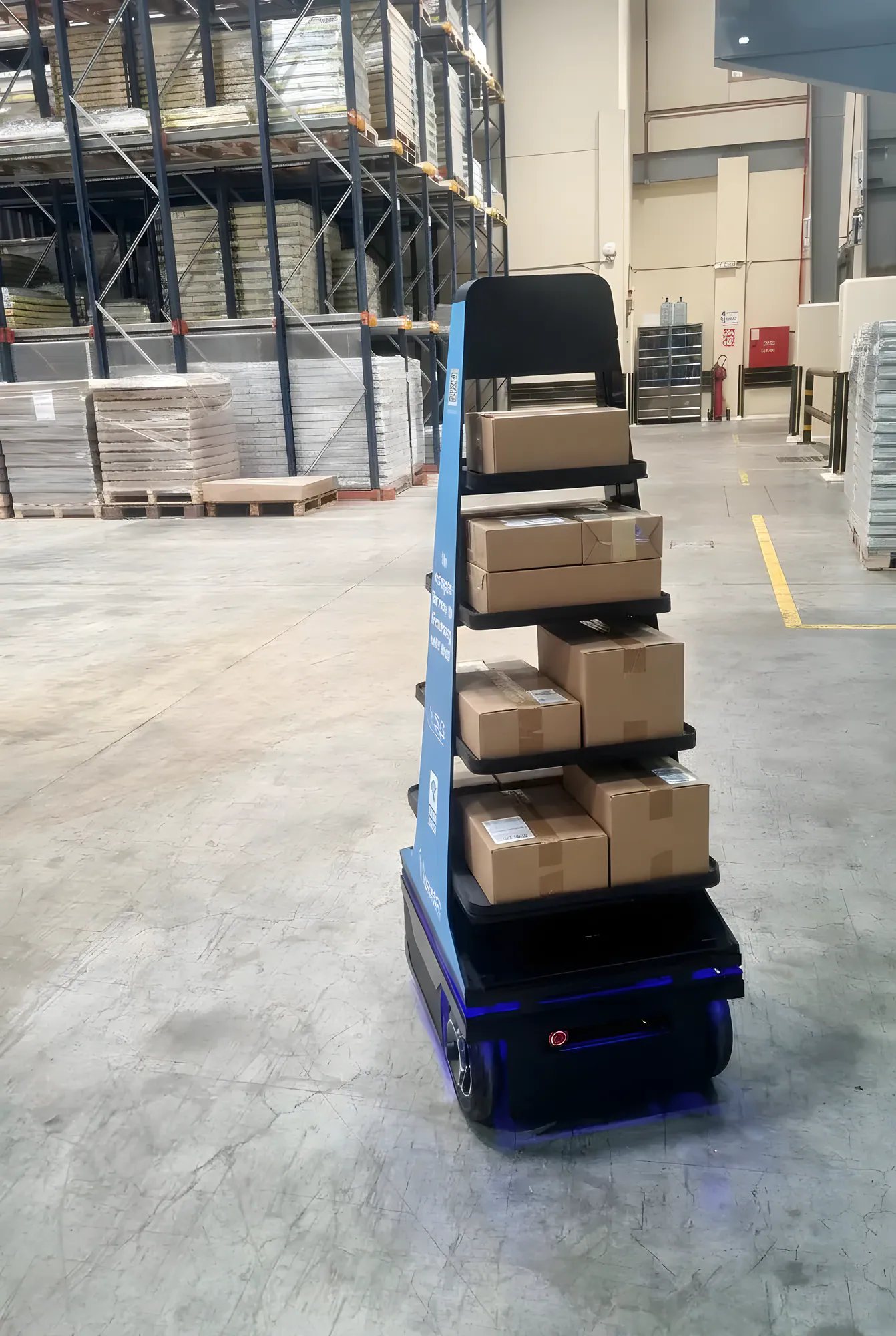
Designed for local operations. Because we build the electronics, the mechanics and the software ourselves, each deployment feeds lessons straight back into the next version of the robot.
Every deployment teaches us something: how a tray should be shaped, where a sensor should sit, how the robot should behave in a crowded aisle. With the full stack in our hands, those lessons become design changes in weeks rather than requests to a distant supplier.
The intelligence layer
Robots generate numbers. Our job is to make those numbers speak.
SAI Analytica is the intelligence layer that brings operational data together in one place. It is organised around dashboards, trackers, data sources, AI agents, activities, generated reports and an agent chat, so that leaders can see performance in real time and ask questions of their data directly.
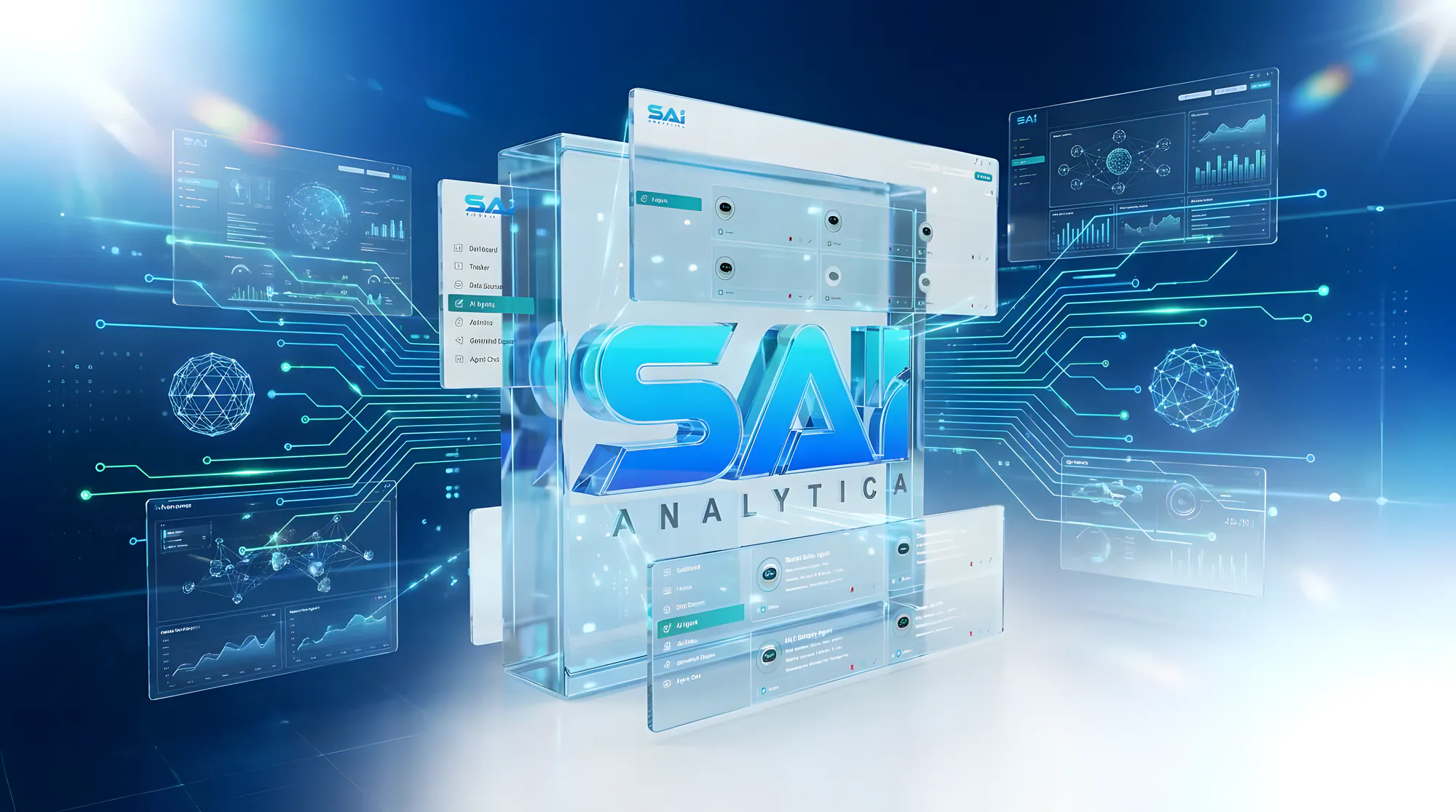
This is where hardware sovereignty and data sovereignty meet. When the robots, the platform and the analytics are designed together, the owner decides where data lives and who can see it.
Beyond AMRs: the same engineering, applied to water
The capabilities we build for robots, from electronics and sensing to precise mechanical design, apply far beyond them.
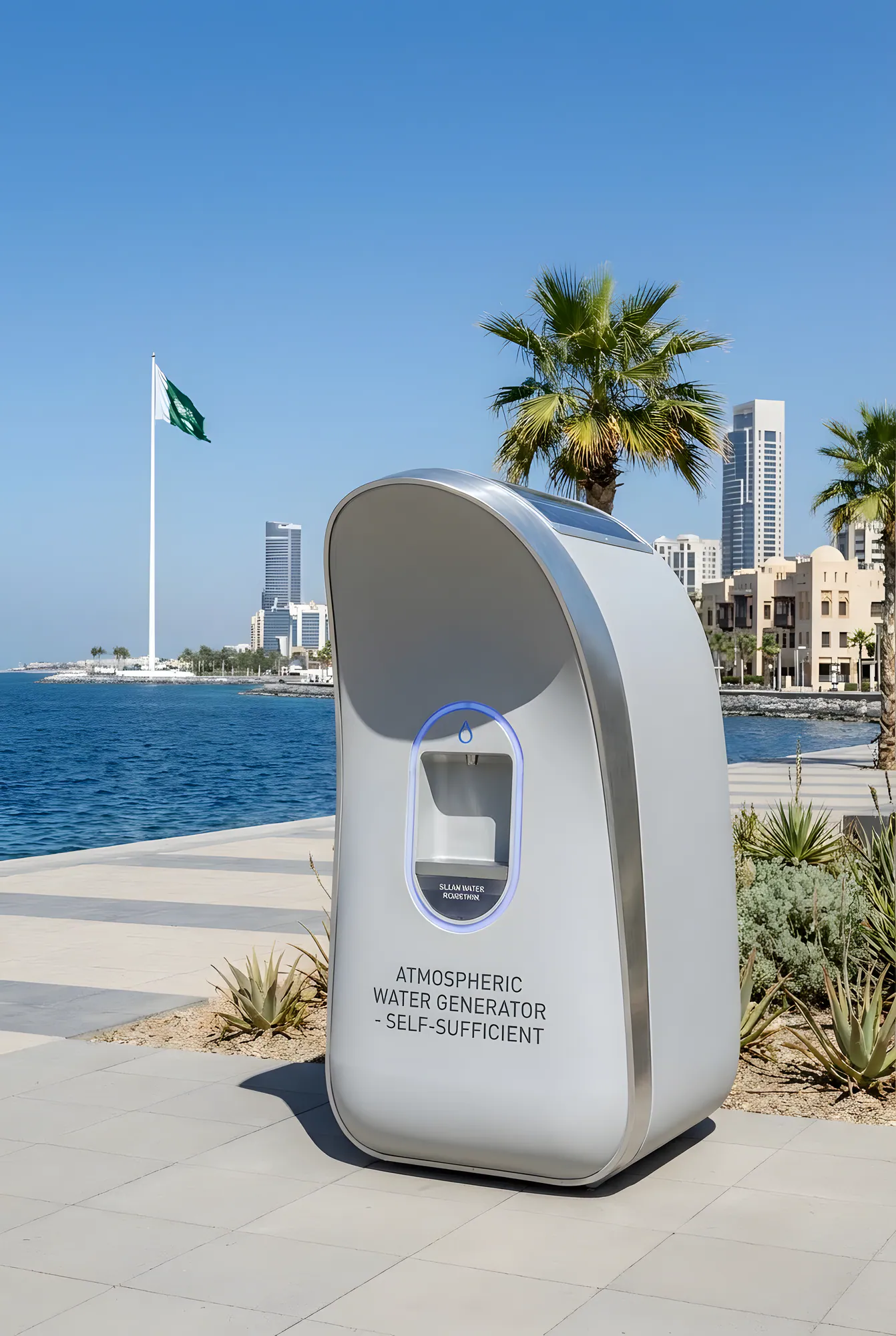
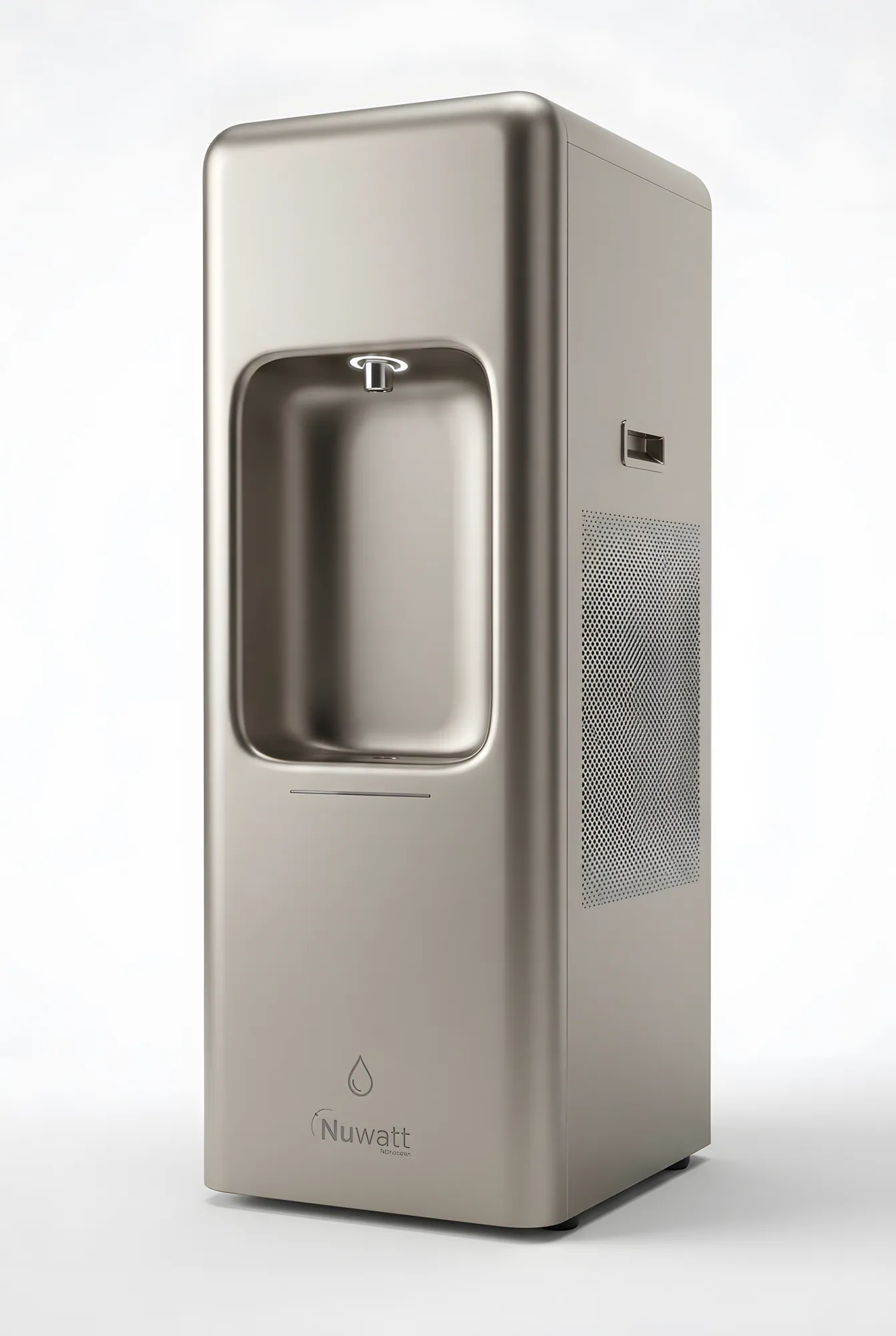
One area we are exploring is water. Capturing moisture from the air and delivering clean drinking water are engineering problems of sensing, control, energy and materials, the same disciplines at the heart of our robots. The designs below are early concepts from that work.
What this means for partners
For organisations in the Kingdom, working with a local robotics manufacturer changes the relationship with the machine.
- A partner, not a catalogue. Requirements shape the design, rather than the other way around.
- Service from the source. The engineers who designed the robot are the ones who support it.
- Data under your control. Robots and analytics built together, with the owner deciding where data goes.
- A shared national capability. Every project strengthens the Kingdom's own robotics knowledge and supply base.
The Fourth Industrial Revolution will be built by machines that learn, move and decide. Nuwatt Technovation's aim is that, in the Saudi Kingdom, those machines are designed, built and understood by the people who depend on them.